
Top 10 DIY Interior Designs Missteps to Avoid
You found the ideal investment property. It needs some TLC, but you are committed to overseeing the vision. Your initial passion and commitment are necessary to succeed in the STR industry. You’ve done your homework by running numbers on the initial investment amount, projected ROI, holding costs, etc. However, are you creating realistic or hopeful numbers for finishing the property? This is the point where most DIY projects take a short-sighted turn. Arbitrary investment amounts that are in your comfort zone and not rooted in reality, combined with personal taste and preferences, will backfire. This is why these top 10 DIY mistakes are important to understand in order to effectively launch a new property that is market-ready and competitively positioned.
Target Audience
The first question you must ask and answer is who is your likely renter? Once you identify a realistic guest profile, then create an environment that speaks to their needs and desires based on industry data and not your personal preferences. Take an honest assessment of your property’s best features and ones that can be corrected or minimized. A large kitchen is a “best feature” example. A feature to correct or make more attractive would be creating a stylized small yard or bedroom that makes the area appear cozy and fun vs. small and cramped. Your design plan will entice your ideal guest through aesthetics, amenities and functionality.
Color
Color psychology is rarely strategically and accurately implemented in DIY design. Most homes feature outdated colors, common colors that make the listing blend in with the competition or combinations that are not cohesive. Every color tells a story, elicits a physiological response and aids in setting the mood for a relaxing, yet energizing vacation. It is best to avoid too many different colors that do not weave through a space and harmonize it as well as avoid outdated colors. For instance, the sterile grey of the mid-2000’s is out. Colors that complement and coordinate with each other woven throughout the entire space bring a sense of cohesiveness, stability and beauty.
Cohesive Style Plans
Sesame Street had a popular educational song and game entitled “One of These Things (Is Not Like the Other)”. This misstep is often visible in DIY interior design. A cohesive space, one that flows with similar styles, colors, patterns and shapes from room-to-room is indicative of design savvy. Subconsciously, guests pick up on these details. Cohesively designed homes make guests feel both comfortable and welcome.
A properties’ architecture also influences the interior design plan for a seamless, intentional experience.
Space Planning
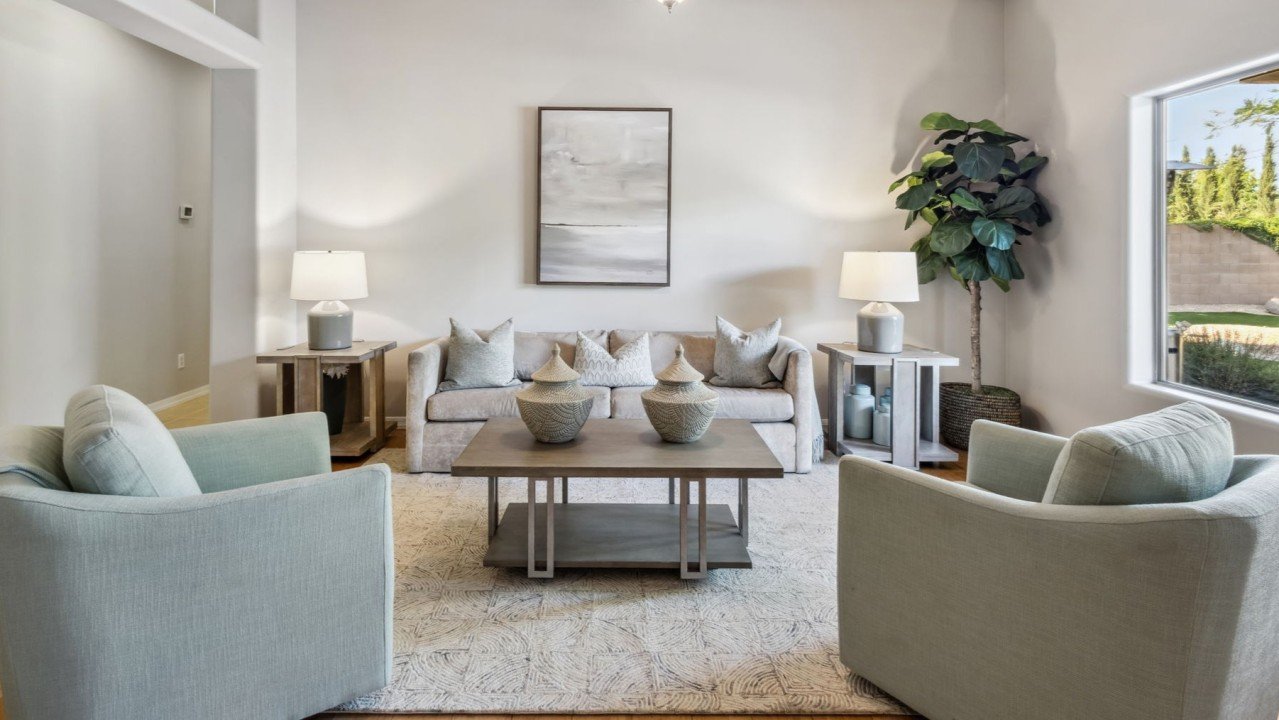
Space planning involves laying out a room to maximize its space and to facilitate a sensible and functional flow of movement. Most often, there is either too much furniture making a room too cramped or not enough furniture making a space feel too cold, stark and unusable. Other mistakes include configuring furniture at different angles that condense the size of a room and obstruct movement.
The size of furniture directly correlates to the size of the room. It is possible to include more furniture in the space than visually apparent which is why accurate dimensions are necessary. There is also a way to maximize minimal pieces of furniture to create a functional and inviting space. The functionality and flow of a space are critical ingredients to making vacation rental spaces that truly accommodate all guests’, including those that have physical limitations.
Furniture
Let’s be real. The typical, big-box store, room-in-a-box set-up is boring, in general, and more so in vacation rentals. There is a very high chance that they have a similar couch/loveseat combination in their house. Keep in mind that people often travel and book spaces that are divergent from their own. Travelers want a fantasy adventure within their means.
Therefore, buying matchy-matchy furniture or bulky, outdated furniture are not ideal design components that set your vacation rental apart. Also keep in mind that every type of furniture has a function. Select furniture that fits the room, complements the other pieces and offers functionality. Instead, opt for coordinating pieces in complementary colors, shapes and sizes. This sets the tone for implementing creativity and creating a unique style.
Accessories
Accessories such as accent pillows, throw blankets, vases, plants, decorative objects, books and art are the finishing details that add design dimension.
Art is one of the biggest stumbling blocks in DIY design. Art should parallel with the sophistication of space. It should also fit the scale of a wall and the room. It is not advisable to add something to a wall just because you have it hanging around. Your vacation rental is not the place to put up art from another era, a random storage item or a repeat of art that is in the majority of rentals. Art reflects the type of room (living versus a kids play space) and price point of a space. When possible, avoid glass framed art above beds, in game rooms and media/bar areas.
Accessories allow you to reinforce a design style, bring in accent colors and add a sense of personality.
Window Treatments
Windows are often an ignored priority. Coverage solutions provide privacy, energy efficiency and lighting control. Black out drapes are crucial, especially for bedrooms and windows that expose the room to public views. Blinds, shutters, panels and shades are all viable options with selections varying by fabric and detail. An important consideration for blinds is to provide guests with lighting control as opposed to blinds that only provide black out coverage. Sliding glass doors should be included in the window treatment design plan.
You can layer window treatments such as sheers with black out drapes or black out drapes with blinds. Custom roller shades are fantastic for functionality and coverage but can leak light out the sides. If that is the case, adding a set of drapes to provide full black out conditions, especially in bedrooms, is usually the best combination.
Invisible Investments
Short-term rentals require numerous “invisible investments.” These are items that cannot be seen by the guest but play a vital role in hygiene and overall functionality. A list of these items includes mattress encasements, pillow protectors, nightlights, trivets, back up batteries, flashlights, cleaning supplies, cleaning appliances, rug tape, etc. Multiple sets of sleeping pillows, sheets, duvets or quilts and towels are often left unaccounted for in the plan.
These investments increase the budget but should be included in the overall set up plan.
Liability Oversights
Primary residences have features that are used daily that could pose as a liability when in service as a rental. Common features include ceiling fans, smoke alarms, uneven flooring and/or transitions, inconsistent lighting, stairs and pools/spas. Ceiling fans that hang too low can potentially hurt a guest, especially if the guest is tall. Stairs that are steep or uneven post a tripping hazard. Unlit areas are ripe with missteps, even on level floors. Unprotected pools and spas present a liability level that can end in death within seconds. Glass artwork and/or a series of 3D objects above a bed can be hazardous. Owners should take a property audit or hire an expert to resolve potential issues prior to launching the rental.
Personality/Story
Every human connection begins with a story. Are you capitalizing on a relevant story for your property that can be told through design? Some interesting connections to create with your guests include stories about the property's history, displaying unusual artifacts, providing backyard adventures, installing locally created art, offering retro and contemporary game selections and creating areas for social media fare. It is also beneficial to include fun facts, historical information and/or local insider tips for your guests.
As with any business venture, set yourself up for success before launching. Research products, management firms, housekeeping teams, insurance providers, CPAs, designers and local regulations. Position your vacation rental to share its unique story, attract the type of clientele you envision and welcome your guests with a five-star start.